Stephen H. Muggleton (born 6 December 1959, son of Louis Muggleton) is Professor of Machine Learning and Head of the Computational Bioinformatics Laboratory at Imperial College London. == Education == Muggleton received his Bachelor of Science degree in computer science (1982) and Doctor of Philosophy in artificial intelligence (1986) supervised by Donald Michie at the University of Edinburgh. == Career == Following his PhD, Muggleton went on to work as a postdoctoral research associate at the Turing Institute in Glasgow (1987–1991) and later an EPSRC Advanced Research Fellow at Oxford University Computing Laboratory (OUCL) (1992–1997) where he founded the Machine Learning Group. In 1997 he moved to the University of York and in 2001 to Imperial College London. From 2025, Muggleton has joined Nanjing University as a full-time professor. == Research == Muggleton's research interests are primarily in Artificial intelligence. From 1997 to 2001 he held the Chair of Machine Learning at the University of York and from 2001 to 2006 the EPSRC Chair of Computational Bioinformatics at Imperial College in London. Since 2013 he holds the Syngenta/Royal Academy of Engineering Research Chair as well as the post of Director of Modelling for the Imperial College Centre for Integrated Systems Biology. He is known for founding the field of Inductive logic programming. In this field he has made contributions to theory introducing predicate invention, inverse entailment and stochastic logic programs. He has also played a role in systems development where he was instrumental in the systems Duce, Cigol, Golem, Progol and Metagol and applications – especially biological prediction tasks. He worked on a Robot Scientist together with Ross D. King that is capable of combining Inductive Logic Programming with active learning. His present work concentrates on the development of Meta-Interpretive Learning, a new form of Inductive Logic Programming which supports predicate invention and learning of recursive programs.
Semantic analytics
Semantic analytics, also termed semantic relatedness, is the use of ontologies to analyze content in web resources. This field of research combines text analytics and Semantic Web technologies like RDF. Semantic analytics measures the relatedness of different ontological concepts. Some academic research groups that have active project in this area include Kno.e.sis Center at Wright State University among others. == History == An important milestone in the beginning of semantic analytics occurred in 1996, although the historical progression of these algorithms is largely subjective. In his seminal study publication, Philip Resnik established that computers have the capacity to emulate human judgement. Spanning the publications of multiple journals, improvements to the accuracy of general semantic analytic computations all claimed to revolutionize the field. However, the lack of a standard terminology throughout the late 1990s was the cause of much miscommunication. This prompted Budanitsky & Hirst to standardize the subject in 2006 with a summary that also set a framework for modern spelling and grammar analysis. In the early days of semantic analytics, obtaining a large enough reliable knowledge bases was difficult. In 2006, Strube & Ponzetto demonstrated that Wikipedia could be used in semantic analytic calculations. The usage of a large knowledge base like Wikipedia allows for an increase in both the accuracy and applicability of semantic analytics. == Methods == Given the subjective nature of the field, different methods used in semantic analytics depend on the domain of application. No singular methods is considered correct, however one of the most generally effective and applicable method is explicit semantic analysis (ESA). ESA was developed by Evgeniy Gabrilovich and Shaul Markovitch in the late 2000s. It uses machine learning techniques to create a semantic interpreter, which extracts text fragments from articles into a sorted list. The fragments are sorted by how related they are to the surrounding text. Latent semantic analysis (LSA) is another common method that does not use ontologies, only considering the text in the input space. == Applications == Entity linking Ontology building / knowledge base population Search and query tasks Natural language processing Spoken dialog systems (e.g., Amazon Alexa, Google Assistant, Microsoft's Cortana) Artificial intelligence Knowledge management The application of semantic analysis methods generally streamlines organizational processes of any knowledge management system. Academic libraries often use a domain-specific application to create a more efficient organizational system. By classifying scientific publications using semantics and Wikipedia, researchers are helping people find resources faster. Search engines like Semantic Scholar provide organized access to millions of articles.
Comparison of raster graphics editors
Raster graphics editors can be compared by many variables, including availability. == List == == General information == Basic general information about the editor: creator, company, license, etc. == Operating system support == The operating systems on which the editors can run natively, that is, without emulation, virtual machines or compatibility layers. In other words, the software must be specifically coded for the operation system; for example, Adobe Photoshop for Windows running on Linux with Wine does not fit. == Features == == Color spaces == == File support ==
DeepRoute.ai
DeepRoute.ai (Chinese: 元戎启行) is a Chinese autonomous driving company founded in 2019 and headquartered in Shenzhen, China. The company develops full-stack self-driving solutions including perception, decision-making, and control systems. == History == DeepRoute.ai was founded in February 2019 in Shenzhen, China, by Zhou Guang (周光), who serves as the company's CEO. In September 2019, the company collaborated with Dongfeng for a live-streamed autonomous driving demonstration. In October 2019, during the 7th Military World Games, DeepRoute.ai conducted Robotaxi demonstration operations. In November 2019, it obtained an intelligent connected vehicle road test permit for public roads in Shenzhen. In October 2020, DeepRoute.ai signed an "Autonomous Driving Leadership Project" with Dongfeng to build one of China's largest autonomous fleets. In August 2020, DeepRoute.ai announced its partnership with Cao Cao Mobility, a Geely-backed ride-hailing company, to test Robotaxis in Hangzhou for daily operations, planning to provide Robotaxis during the 2022 Asian Games. In September 2021, DeepRoute.ai secured US$300 million in a Series B funding round led by Alibaba. In December 2021, the company unveiled its DeepRoute-Driver 2.0, an L4-level autonomous driving solution comprising five solid-state lidar sensors, eight cameras, a proprietary computing system and an optional millimeter-wave radar. with a production cost of under US$10,000. In June 2022, it partnered with Deppon Express to provide autonomous light truck freight transfer services. In March 2023, the company launched its high-precision map-free intelligent driving solution, DeepRoute-Driver 3.0. In November 2024, Great Wall Motor announced a $100 million Series C funding round for Deeproute. With this, Deeproute has completed five rounds of financing, raising a cumulative total of over $500 million. Its shareholders include Fosun RZ Capital, Yunqi Partners, Alibaba, Vision Plus Capital, and Dongfeng, among others. In the same month, Deeproute.ai emphasised that they were in "deep cooperation" with Nvidia and spoke on being part of the first batch of companies in China to get a hold of Nvidia's newer Thor chip for cars which will be used in a new system released next year. This new system will help manage more complex driving scenarios through visual cues. == Products == === VLA Model === VLA Model is a Vision–language–action model designed for autonomous driving systems. It integrates visual perception, semantic understanding, and action decision-making into a unified framework, aiming to enhance the safety and adaptability of advanced driver-assistance systems (ADAS) in complex road environments. The model was officially launched on August 26, 2025, as the core of DeepRoute.ai's DeepRoute IO 2.0 platform. The VLA model is characterized by its "visual-language-action" architecture, which incorporates a chain-of-thought (CoT) reasoning capability inspired by large language models. This design is intended to address the "black box" limitations of traditional end-to-end autonomous driving systems by enabling the model to analyze information, infer causality, and make decisions in a more transparent and interpretable manner. === Appliance === The company has partnered with several automakers including Dongfeng Motor Corporation and Geely to develop and test autonomous vehicles.
Final Cut Express
Final Cut Express was a video editing software suite created by Apple Inc. It was the consumer version of Final Cut Pro and was designed for advanced editing of digital video as well as high-definition video, which was used by many amateur and professional videographers. Final Cut Express was considered a step above iMovie in terms of capabilities, but a step underneath Final Cut Pro and its suite of applications. As of June 21, 2011, Final Cut Express was discontinued in favor of Final Cut Pro X. == History == Final Cut Express 1.0, based on Final Cut Pro 3, was released at Macworld Conference and Expo in San Francisco in 2003. The second version, based on Final Cut Pro 4, was released at Macworld San Francisco in 2004. The third version, capable of editing high definition video, was also announced at Macworld San Francisco a year later, and was released as Final Cut Express HD in February 2005. It was based on Final Cut Pro HD (version 4.5) and included LiveType 1.2 and Soundtrack 1.2. Final Cut Express version 3.5 was released with little fanfare in May 2006 as a Universal Binary. In addition to improving real-time rendering with Dynamic RT, version 3.5 upgraded LiveType to version 2.0 and Soundtrack to version 1.5. In November 2007, Apple released Final Cut Express 4, which although it did not support real-time editing in the AVCHD format (it only allowed for transcoding AVCHD to Apple Intermediate Codec (AIC) provided that the camera was actually attached to the computer - it did not convert AVCHD files stored elsewhere and is currently for Intel processors only), imported iMovie '08 projects and included 50 new filters. It did not include Soundtrack 1.5, but it still included LiveType which enables users to create advanced text for the movies they created in Final Cut. The price was dropped from $299 for version 3.5 to $199 for version 4.0. In June 2011, Final Cut Express was officially discontinued, in favor of Final Cut Pro X. == Features == Final Cut Express' interface was identical to that of Final Cut Pro, but lacks some film-specific features, including Cinema Tools, multi-cam editing, batch capture, and a time code view. The program performed 32 undo operations, while Final Cut Pro did 99 [2]. Features the program did include were: The ability to keyframe filters Dynamic RT, which changes real-time settings on-the-fly Motion path keyframing Opacity keyframing Ripple, roll, slip, slide and blade edits Picture-in-picture and split-screen effects Up to 99 video tracks and 12 compositing modes Up to 99 audio tracks Motion project import Two-way color correction. Chroma key One feature of Final Cut Express that was not available in Final Cut Pro is the ability to import iMovie '08 projects (though transitions are not preserved). === RT Extreme === Inherited from Final Cut Pro, Final Cut Express features RT Extreme, which allows previews of some video filters and transitions without rendering. Audio that is not in the native AIFF file format needs rendering before it can be played back. RT Extreme has three modes: 'Safe', for seeing multiple video layers at a quality that more or less guarantees a smooth playback; 'Unlimited', which allows the maximum number of composited video layers to be viewed at the same time; and 'Dynamic', which alternates between these settings depending on how many simultaneous video tracks are present. Frame dropping may result from using 'Unlimited' on low-resource machines. === Boris Calligraphy === Like Final Cut Pro, Express also comes with Boris Calligraphy, a plugin for advanced titling and scrolling/crawling titles more sophisticated than the ones that can be created with the built-in title overlays. Calligraphy has a WYSIWYG interface and features wrapping, alignment, leading, kerning and tracking features, as well as allowing up to five custom outlines and five custom drop shadows to be defined for a selected portion of the title. == Soundtrack == Prior to version 4, Final Cut Express included Soundtrack 1.5, a music program similar to the consumer-level GarageBand, but designed for videographers who wish to add music to their films. Soundtrack comes with around 4,000 professionally recorded instrument loops and sound effects that can be arranged in multiple tracks beneath the video track. To use Soundtrack, users export their Final Cut Express sequence, or a marked portion thereof, as a reference file, which can include scoring markers defined in the timeline. This reference file can be imported as the video track in Soundtrack. Soundtrack is functionally and visually identical to Soundtrack Pro's multitrack editing mode, but includes fewer Logic plugins and lacks the highly regarded noise removal tool. Soundtrack was removed from Final Cut Express 4, which lowered its price and may have encouraged people to buy Logic Express.
Pixelmator
Pixelmator is a series of graphics editors developed by Apple for macOS, iOS, and iPadOS. Pixelmator apps leverage Apple-specific technologies such as CoreML and Metal. Pixelmator uses a proprietary format across their apps (.PXD), but supports editing a variety of file types including Photoshop, RAW, and WebP. == History == Pixelmator Team was founded in 2007 by Lithuanian brothers Saulius and Aidas Dailidė, and released Pixelmator (now Pixelmator Classic) 1.0 in September of the same year. The company resided in Vilnius, Lithuania. In November 2024, Pixelmator Team agreed to be acquired by Apple for an unknown monetary amount, which was completed on 11 February 2025, the company was later folded into Apple with its products coming under them fully. == Pixelmator Classic == Pixelmator Classic was the original version of Pixelmator released for Mac on 25 September 2007. It uses a palette-style interface with floating toolbars compared to Pixelmator Pro's single-window interface. It is no longer being updated and has been delisted from the Mac App Store. == Pixelmator iOS == Pixelmator for iOS launched on 23 October 2014 as an iPad-exclusive app with touch-optimized versions of Pixelmator's desktop features. In May 2015, Pixelmator for iOS 2.0 was released with support for the iPhone. Apple no longer updates Pixelmator for iOS as of 13 January 2026, shortly before the release of Pixelmator Pro for iPad. == Pixelmator Pro == Pixelmator Pro is an image, video, and vector editing software for macOS that launched on 29 November 2017. It was a paid upgrade for Pixelmator Classic users, featuring a redesigned interface, a graphics pipeline rewritten using Metal, Apple silicon support and a greater focus on ML/AI editing features. On 28 January 2026, Apple announced Apple Creator Studio, a subscription bundle for their professional software that contains Pixelmator Pro. They also brought Pixelmator Pro to iPad, shortly after discontinuing Pixelmator iOS. == Photomator == Photomator (formerly Pixelmator Photo) is a photo-oriented editing app which launched on iPad in 2019, on iOS in 2021, and macOS in 2022. After launching the macOS version, the app moved from a one-time purchase to a subscription; however, a lifetime license can still be purchased for $99. Photomator differentiates itself from other Pixelmator apps with features such as batch editing of full photoshoots and AI-powered color correction. Edits in Photomator are made on a single layer and are non-destructive.
Companion robot
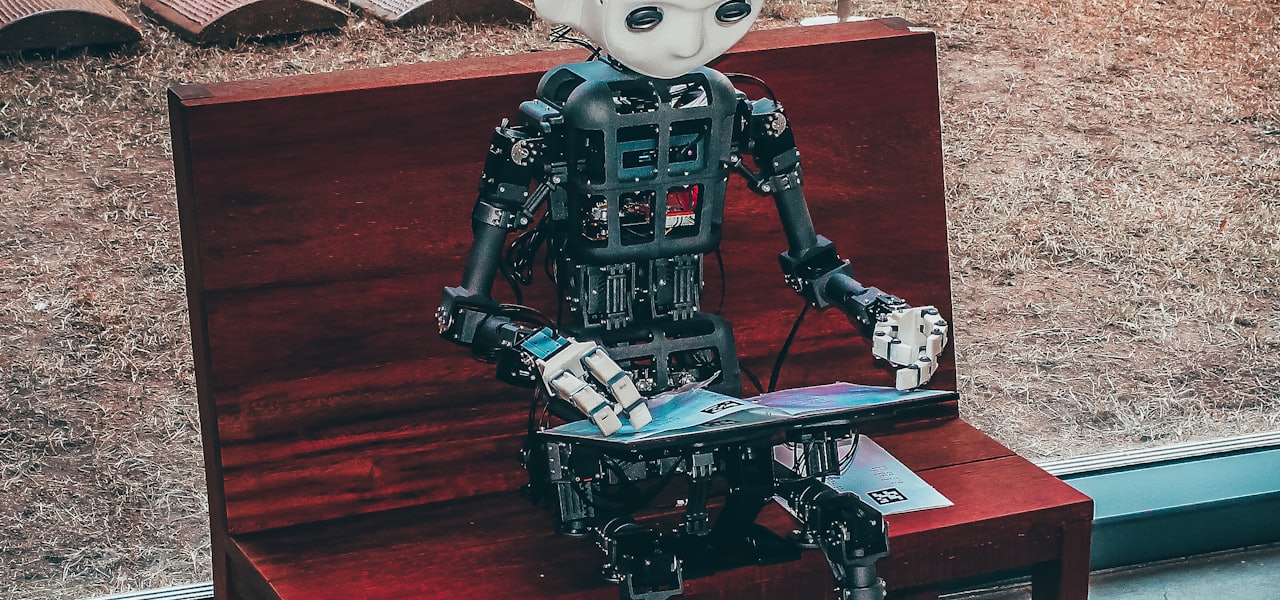
A companion robot is a robot created to create real or apparent companionship for human beings. Target markets for companion robots include the elderly and single children. Companions robots are expected to communicate with non-experts in a natural and intuitive way. They offer a variety of functions, such as monitoring the home remotely, communicating with people, or waking people up in the morning. Their aim is to perform a wide array of tasks including educational functions, home security, diary duties, entertainment and message delivery services, etc. The idea of companionship with robots has already existed on science fictions of 1970s, like R2-D2. Starting from the late 20th century, companion robots became a reality, mostly as robotic pets. Besides entertainment purposes, interactive robots were also introduced as a personal service robot for elderly care around 2000. == Characteristics == Companion robots try to interact with users. They gather information about users based on their interactions and yield feedback. This procedure varies slightly based on their specific roles. For example, social-companion robots make simple conversations, while pet-companion robots mimic being real pets. == Types == Companion robots can perform a variety of tasks and they are produced in a specialized manner according to their purpose or target audience in order to increase convenience and end user satisfaction. === Social companion robots === Social companion robots are designed to provide companionship and be a solution for unwanted solitude. They often mimic adult human, child or pet behaviours appealing to the user base. Robots which are specifically devised for simple conversations, conveying emotions and respond to user feelings fall under this category. === Assistive companion robots === Assistive companion robots are aimed at people who require constant care because of age, disability or rehabilitation purposes. Such robots can help disadvantaged users with their daily tasks, act as reminders (e.g., for regular medication) and facilitate mobility in everyday actions. Assistive companion robots reduce the intensity of labour that should be performed by caretakers, nurses and legal guardians. === Educational companion robots === Educational companion robots perform tutorship for students, regardless of their ages, and can teach desired subjects with activities tailored for the user such as interactive assignments and games. Rather than replacing teachers and instructors, educational companion robots are aides to them. === Therapeutic companion robots === Designed for individuals coping with stress (PTSD in severe cases), anxiety and loneliness; therapeutic companion robots support users' emotional and mental wellbeing. Such robots can be utilized in hospitals and care facilities as well as dwellings where the distressed user may need the most help. Therapeutic companion robots bear a vast resemblance to assistive companion robots to the extent of being a branch of them; the nuance between these two types of companion robots is that the former is for long-term/lifetime usage while the latter is mostly for the duration of the therapy received by the user. === Pet companion robots === Pet companion robots are for individuals who seek an alternative to live pets as live animals demand a considerable amount of care and may not be eligible for people with allergies. These robots aim to be perfect imitations of a pet while diminishing the chore aspect of having one. === Entertainment companion robots === Entertainment companion robots are designed solely for entertainment and can provide numerous ways of entertainment, ranging from dancing to playing games with the user. People who would appreciate an individual to have fun with are the main audience of such products. === Personal assistant robots === Personal assistant robots help people with daily tasks, management, scheduling, reminding etc. Their area of activity can be offices as well as homes and public spaces. === Sex robots === Sex robots are anthropomorphic robotic sex dolls that have human-like movement or behavior, and some degree of artificial intelligence. As of 2026, although elaborately instrumented sex dolls have been created by a number of inventors, no fully animated sex robots yet exist. Simple devices have been created which can speak, make facial expressions, or respond to touch. There is controversy as to whether developing them would be morally justifiable. In 2015, robot ethicist Kathleen Richardson called for a ban on the creation of anthropomorphic sex robots with concerns about normalizing relationships with machines and reinforcing female dehumanization. Questions about their ethics, effects, and possible legal regulations have been discussed since then. == Examples == There are several companion robot prototypes, and these include Paro, CompanionAble, and EmotiRob, among others. === Paro === Paro is a pet-type robot system developed by Japan's National Institute of Advanced Industrial Science and Technology (AIST). The robot, which looked like a small harp seal, was designed as a therapeutic tool for use in hospitals and nursing homes. The robot is programmed to cry for attention and respond to its name. Experiments showed that Paro facilitated elderly residents to communicate with each other, which led to psychological improvements. === CompanionAble === This robot is classified as an FP 7 EU project. It is built to "cooperate with Ambient Assistive Living environment". The autonomous device, which is also built to support the elderly, helps its owner interact with smart home environment as well as caregivers. The robot functions as a mobile friend, by which natural interaction is possible via speech and the touchscreen to detect and track people at home. === EmotiRob === EmotiRob is developed in a robotics project which is the continuity of the MAPH (Active Media For the Handicap) project in emotion synthesis. The aim of the project was to maintain emotional interaction with children. EmotiRob designed in a way that a child can hold it in a his/her arms and with which he/she could interact by talking to it, and then the robot would express itself through body postures or facial expressions. It has cognitive capabilities, which are further extended so that the robot can have a natural linguistic interaction with its owner through the DRAGON speech-recognition software developed by a company called NUANCE. Such interaction is expected to facilitate a child's cognitive development and develop new learning patterns. === LOVOT === Lovot is a Japanese company robot whose only purpose is "to make you happy". It features over 50 sensors that mimic the behavior of a human baby or small pet, a 360° camera with a microphone, the ability to distinguish humans from objects, neoteny eyes, and an internal warmth of 30° celsius. An interactive Lovot Café was opened in Japan October 3, 2020. === NICOBO === Nicobo was developed by Panasonic and was influenced by the loneliness of lockdowns created as a measure of the COVID-19 pandemic. It was designed to appear vulnerable, which creates empathy in its owners. Nicobo's name derives from the Japanese word for "smile". It wags its tail, engages in baby talk, and stays as a housemate. === Hyodol === Hyodol is an advanced care robot designed to support the elderly by reminding them to take their medications and monitoring their movements to keep their guardians informed. Additionally, this innovative robot can detect and respond to the emotional states of its elderly users, adding a layer of personalized care. Hyodol is designed with the appearance and speech style of a 7-year-old Korean grandchild, featuring a soft fabric exterior and user interaction methods such as striking the head or patting the back. It is equipped with various sensors and wireless communication technologies to collect and process data, supporting mobile apps and PC web monitoring systems for remote monitoring from anywhere. In South Korea, approximately 10,000 Hyodol robots are deployed to the homes of elderly individuals living alone, providing essential support and companionship. Local governments, including provincial and county offices, have embraced Hyodol as a solution to address social challenges stemming from the country's rapidly aging society.Furthermore, the robot is widely utilized in the treatment of dementia patients at a university hospital in Gangwon province. Hyodol was honored with the Mobile World Congress (MWC) Global Mobile Awards (GLOMO) in the "Best Mobile Innovation for Connected Health and Wellbeing" category on February 29, 2024. === Moxie === Moxie was a companion robot for autistic children developed by a company called Embodied. Although it had limited motion, it presented itself as a lifelike avatar. It was designed to help the children learn emotional cognition, using remotely hosted large language models to direct its respons